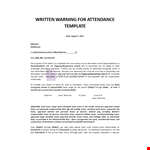
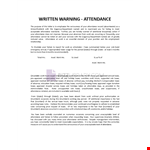
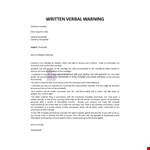
Are you looking for a written verbal warning example? As an employer, it's crucial to address employee performance issues in a fair and consistent manner. Giving a written warning is an effective way to communicate your concerns and expectations clearly.
A warning letter can serve as a written record of the conversation, highlighting the specific issues and providing guidance on improvement. It helps ensure that both parties are on the same page, reducing any ambiguity or misunderstandings.
When it comes to HR procedures, it's important to follow a structured approach. This includes properly documenting the warning, ensuring that it includes essential details such as the employee's name, date, and specific issues observed.
But how do you give a written warning to an employee effectively? It's crucial to be objective, specific, and respectful in your communication. Clearly outline the areas of concern, provide concrete examples, and clearly express your expectations for improvement.
While verbal warnings can be effective in certain situations, written warnings offer clear documentation and accountability. They provide a stronger message to the employee and can be crucial if further disciplinary action is needed in the future.
Understanding the written warning procedure is important to ensure a fair and consistent approach across your organization. By having a clear procedure in place, you maintain transparency and promote trust between HR and employees.
So, whether you need a warning letter example, want to understand the difference between verbal and written warnings, or learn about the written warning procedure, we've got you covered.