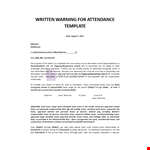
If you're dealing with issues of low attendance at the workplace, issuing a warning letter can be an effective solution. In this article, we'll guide you on how to give a well-crafted written warning to an employee regarding low attendance, and discuss the key differences between verbal and written warnings.
First, it's essential to understand the procedure for giving a written warning. Begin by documenting the employee's infractions clearly, including dates, times, and specific details. This documentation will serve as evidence of their poor attendance and performance.
Next, you need to decide whether to issue a verbal warning or a written warning. While verbal warnings may be appropriate for first-time offenses, persistent low attendance merits a written warning. A written warning carries more weight legally and increases accountability for the employee.
When preparing a warning letter for an employee's low attendance, ensure it is clear, concise, and professional. Clearly state the problem, consequences, and expectations moving forward. Also, provide guidance on how the employee can improve their attendance and performance.
Remember, a warning letter should emphasize the need for improvement while offering support to help the employee succeed. It's crucial to follow your company's policy and legal regulations when issuing warning letters for poor attendance.
In conclusion, addressing low attendance through a well-crafted warning letter is an essential step in improving employee performance. By following proper procedures and guidelines, you can effectively communicate the seriousness of the issue and provide an opportunity for growth.