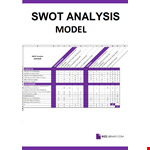
SWOT stands for Strengths, Weaknesses, Opportunities, and Threats. It is a framework used in business and strategic planning to assess and analyze internal and external factors that can impact an organization's performance.
When conducting a SWOT analysis, the first step is to define and understand each component:
Strengths: These are the internal factors that give an organization a competitive advantage. This could include unique expertise, valuable assets, or strong brand recognition.
Weaknesses: These are the internal factors that hinder an organization's success. It could be lack of resources, ineffective processes, or limited market presence.
Opportunities: These are external factors that have the potential to positively impact an organization. This could include emerging markets, technological advancements, or changing consumer needs.
Threats: These are external factors that could negatively influence an organization. It could be new competitors, changing regulations, or economic downturns.
The TOWS matrix is a variation of the traditional SWOT analysis that helps identify strategic options. It combines the internal and external factors to create strategies that leverage strengths, address weaknesses, capitalize on opportunities, and mitigate threats.
Understanding the meaning of SWOT and conducting a SWOT analysis can provide valuable insights to organizations, helping them make informed decisions, develop strategies, and achieve their goals.
Need examples of SWOT analysis? Check out our comprehensive guide to learn more.