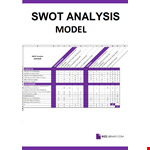
Are you looking for comprehensive SWOT examples to enhance your strategic planning? In this article, we will delve into the world of SWOT analysis, exploring its definition, meaning, and practical applications. Additionally, we will discuss the importance of the TOWS matrix and provide real-life examples to help you gain valuable insights.
Starting with SWOT analysis, it is a powerful framework widely utilized by businesses to assess their internal strengths and weaknesses, as well as external opportunities and threats. By identifying these factors, organizations can develop effective strategies to capitalize on strengths, improve weaknesses, leverage opportunities, and mitigate threats.
When it comes to the meaning of SWOT analysis, it goes beyond a simple evaluation. It enables you to gain a deeper understanding of your business environment, competitors, market trends, and customer preferences. By conducting a SWOT analysis, you can make more informed decisions and ultimately drive your business towards success.
Moreover, the TOWS matrix complements SWOT analysis by helping you determine the best strategic options based on the identified factors. It allows you to leverage strengths to exploit opportunities, overcome weaknesses to seize opportunities, convert threats into opportunities, and minimize weaknesses to mitigate threats.
To illustrate the practicality of SWOT analysis, we have compiled a variety of real-world examples. These examples cover various industries and showcase how businesses have effectively utilized SWOT analysis to gain a competitive advantage, innovate, and grow.
In conclusion, understanding SWOT analysis, its meaning, and the application of the TOWS matrix is crucial for strategic planning. Explore our collection of SWOT examples to gain valuable insights and take your business to new heights.