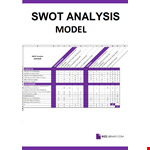
Are you looking to conduct a SWOT analysis of a company? Understanding the SWOT analysis definition and meaning is crucial for assessing your organization's strengths, weaknesses, opportunities, and threats. This strategic tool provides valuable insights to help you make informed business decisions.
A SWOT analysis involves examining both internal and external factors that impact your company's performance. By identifying strengths and weaknesses within your organization, you can leverage your competitive advantages while addressing areas for improvement. Moreover, recognizing external opportunities and threats allows you to capitalize on market trends and mitigate potential risks.
One technique often used alongside SWOT analysis is the TOWS matrix. This matrix focuses on transforming weaknesses into strengths and converting threats into opportunities. By combining internal and external factors, the TOWS matrix helps generate strategies for maximizing your company's potential.
So, what does SWOT stand for? SWOT is an acronym for Strengths, Weaknesses, Opportunities, and Threats. Conducting a SWOT analysis enables you to gain a comprehensive understanding of your company's current position in the market and develop strategies for future success.
Ready to take your business to the next level? Let's explore real-world examples and dive deeper into the world of SWOT analysis for a company.