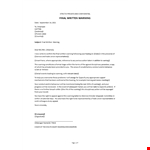
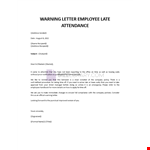
Issuing a Second Written Warning is an important step in addressing employee performance or conduct issues. This formal warning communicates that the employee's behavior or performance has not improved after a previous warning, and further disciplinary action may be taken if necessary.
A Warning Letter is a common method used to convey a Second Written Warning. It outlines the specific concerns, expectations, and consequences associated with the employee's behavior or performance. By providing clear documentation of the issue, a written warning can help protect the company in case of future disputes or legal challenges.
Human resources (HR) professionals play a vital role in the Second Written Warning process. They ensure that the warning letter follows proper procedures, adheres to company policies, and is delivered and documented correctly.
For your convenience, you can find a variety of written warning templates specifically designed for Second Written Warnings. These templates offer a structured format and can be customized to suit your company's needs.
When dealing with employment-related issues such as Second Written Warnings, it's essential to consider the legal implications and consult with an employment attorney if necessary. They can provide guidance on best practices, ensure compliance with applicable laws, and minimize potential risks.
To streamline the process of documenting and managing Second Written Warnings, utilizing a write-up form can be highly beneficial. This form allows for consistent record-keeping and simplifies the tracking of warning progression.
In conclusion, issuing a Second Written Warning with a warning letter, HR involvement, proper templates, and write-up forms helps ensure fair and consistent handling of employee performance or conduct issues. By following established procedures and seeking legal guidance if needed, you can successfully address these challenges in the workplace.