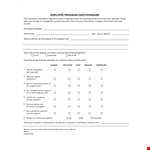
Employee performance evaluation is a crucial process for assessing and improving employee productivity and effectiveness in the workplace. It allows employers to measure employees' job performance, identify strengths and weaknesses, set goals, and provide valuable feedback.
One aspect of employee performance evaluation is self-evaluation, where employees assess their own performance. Sample answers for self-evaluation can serve as a helpful guide in providing constructive feedback and showcasing accomplishments.
Furthermore, essay examples can provide insights into how to effectively communicate thoughts and ideas related to employee performance evaluation. These examples can help employees express their achievements, challenges, and areas for improvement.
Employee self-evaluation forms are commonly used to gather relevant information from employees. These forms enable employees to provide a comprehensive self-assessment, covering various aspects of their job responsibilities, skills, and accomplishments.
EPR (Employee Performance Review) is an effective tool for evaluating and documenting employee performance. It allows employers to track performance over time, set performance expectations, and provide feedback on both strengths and areas needing development.
Sample employee evaluation is a valuable resource for employers to assess employee performance objectively. It provides a structured evaluation framework, enabling fair and consistent assessment.
Lastly, employee evaluation templates can simplify the evaluation process for employers. These templates provide a standardized format for assessing employee performance, making it easier to compare and analyze performance across multiple employees.